The shared foundation
It starts with GHK-Cu.
At first glance, these formulas might seem interchangeable. Each starts with GHK-Cu, but every added peptide introduces another research question.
GHK-Cu is the copper-bound form of GHK, a naturally occurring peptide studied in skin and tissue biology. Explore the GHK review.
Think of collagen as part of skin’s supporting framework. Researchers study how GHK-related molecules influence collagen and the extracellular matrix, the network of material surrounding cells. Read the biological background.
It’s what comes next.
Meet the ingredients
What does each peptide bring?
GHK-Cu
Copper-peptide biology
GHK-related research explores skin structure, collagen and tissue remodeling, the ongoing process of breaking down and rebuilding tissue. Research background.
Topical cosmetic research is part of that story; it is not evidence for the same outcomes from other forms of a product. Topical research review.
BPC-157
Tissue-repair research
BPC-157 is a synthetic peptide investigated in preclinical research, meaning cell and animal studies, including experiments involving tendon tissue and cell movement. Tendon-cell study.
Repair is not a single event. Studying how cells survive and move helps researchers examine different parts of that process.
TB-500
Thymosin-related research
TB-500 research includes short fragments related to thymosin beta-4; the fragment, the full-length peptide and its breakdown products are different molecules. Molecule-specific research.
This makes the exact compound important when reading about tissue repair and cellular movement. Findings about one form should not be treated as findings about every form.
KPV
Inflammatory signaling
KPV contains three amino acids, lysine, proline and valine, and comes from a segment of the signaling hormone alpha-MSH. KPV study.
Cell and mouse experiments have examined how KPV affects inflammatory messages, including in intestinal inflammation. Preclinical findings.
The four formulations
One foundation. Different profiles.
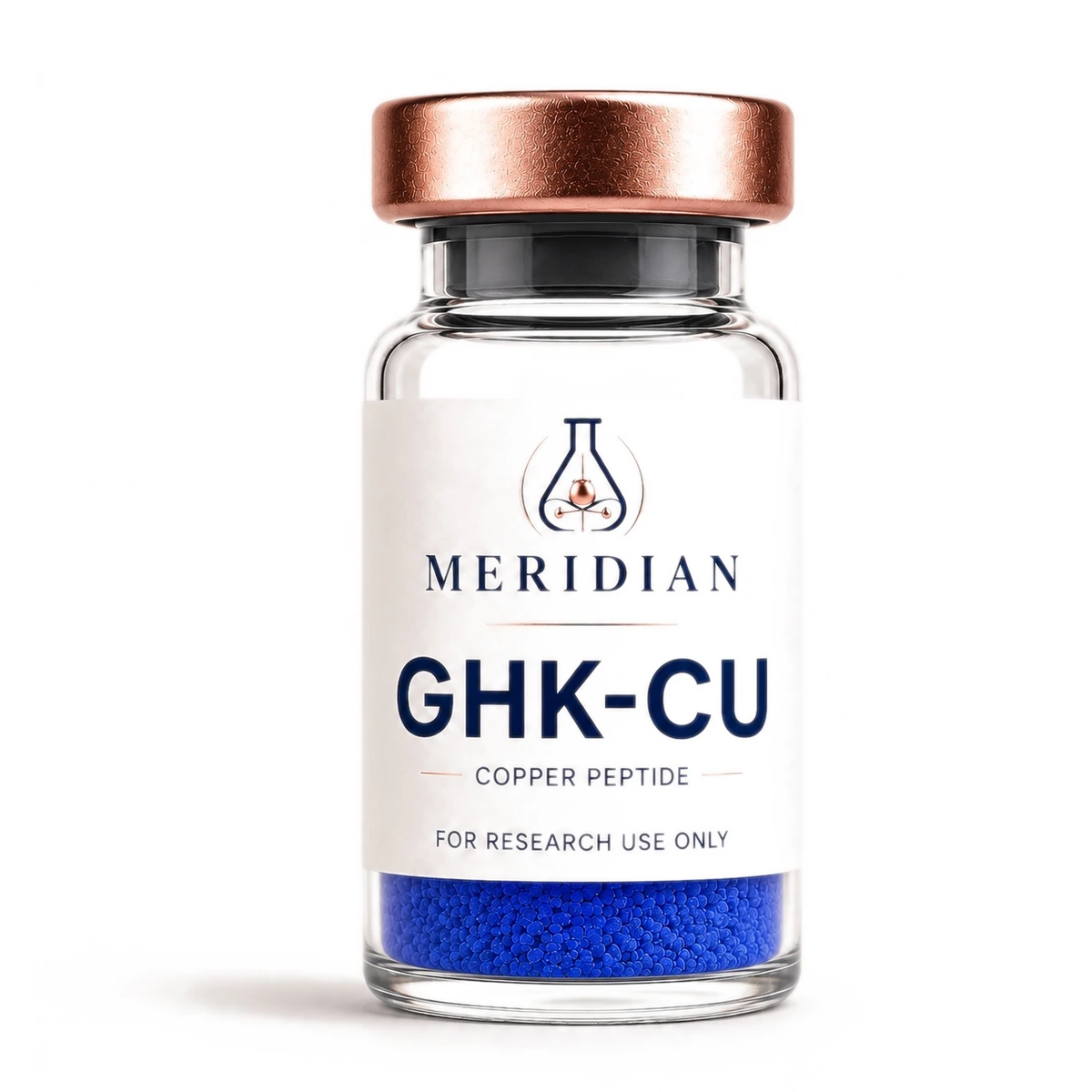
GHK-Cu
The focused formula
One active peptide and a focused starting point for copper-peptide research, without introducing other ingredients.
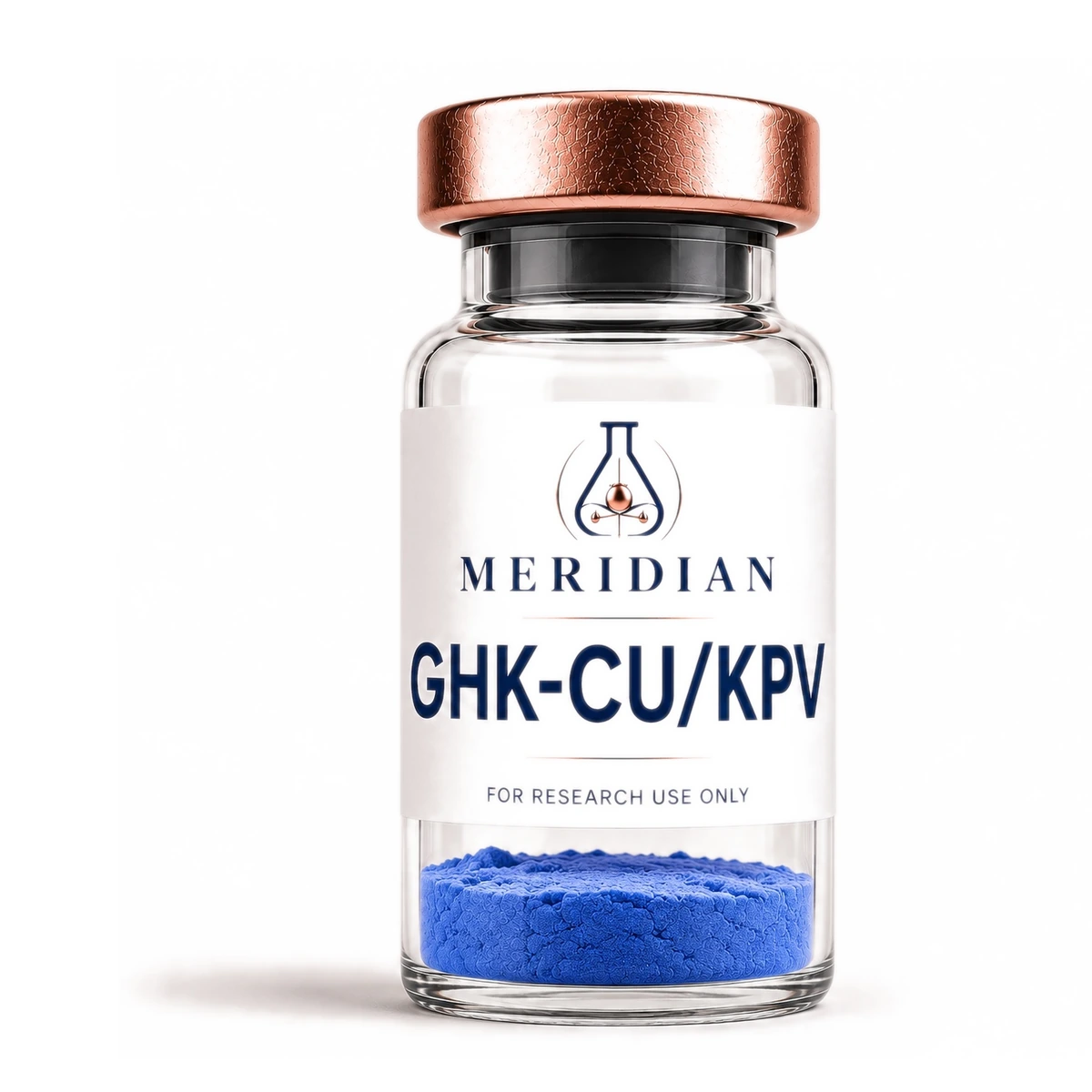
GHK-Cu/KPV
The two-peptide formula
The simplest blend here pairs a copper peptide with a second ingredient of interest in inflammatory-signaling research.
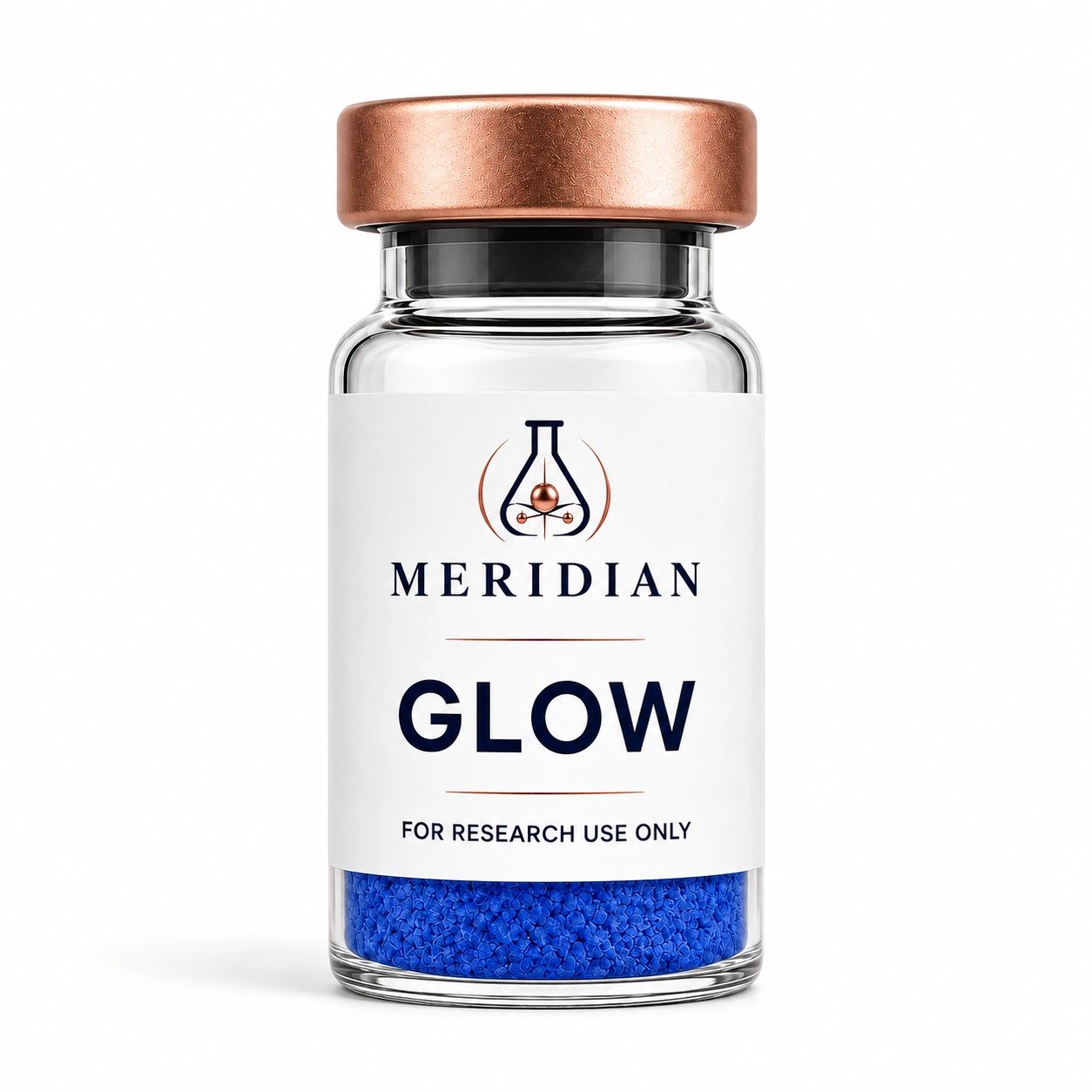
GLOW
The three-peptide formula
GLOW adds BPC-157 and TB-500 to the shared foundation, broadening its ingredient profile into tissue-related research.
04 · KLOW
Four Peptides.
One Comprehensive Formula.
KLOW brings together every peptide in this comparison. It includes GLOW’s three ingredients and adds KPV.
Explore KLOW →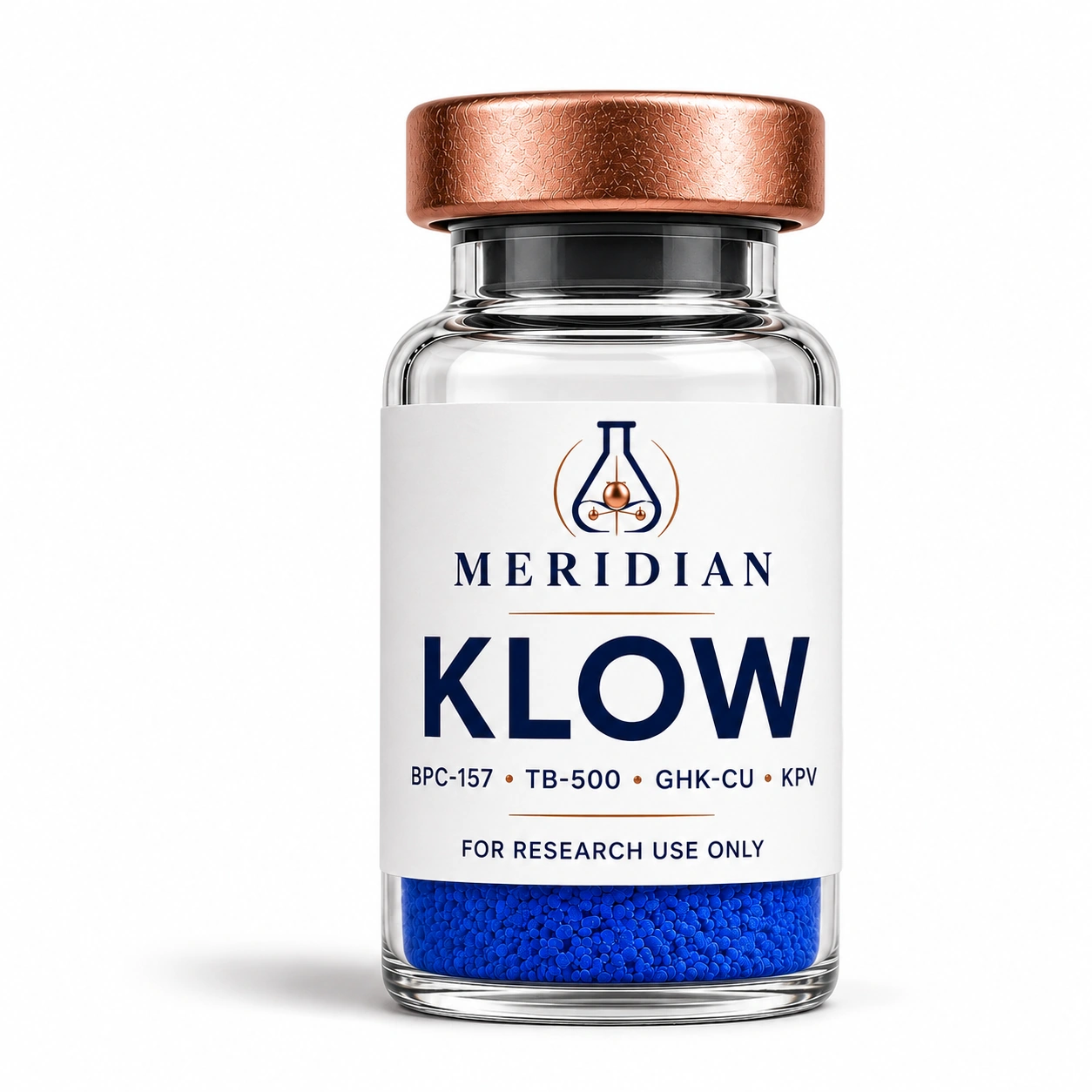
GHK-Cu
The copper-peptide foundation
BPC-157
Tissue-repair research
TB-500
Thymosin-related research
KPV
Inflammatory-signaling research
“Comprehensive” describes the ingredient profile, not greater proven potency, clinical effectiveness or synergy.
GLOW vs. KLOW
The defining difference is KPV.
GLOW
KPV
One additional ingredient
KLOW
All four peptides
Does that make KLOW stronger? Not automatically. A broader ingredient list is not a ranking of effectiveness, and the number of peptides alone cannot tell us how a combination performs.
The difference at a glance
| Ingredient | GHK-Cu | GHK-Cu/KPV | GLOW | KLOW |
|---|---|---|---|---|
| GHK-Cu | ✓ | ✓ | ✓ | ✓ |
| BPC-157 | — | — | ✓ | ✓ |
| TB-500 | — | — | ✓ | ✓ |
| KPV | — | ✓ | — | ✓ |
| Peptides | 1 | 2 | 3 | 4 |
GHK-Cu is the simplest profile. GHK-Cu/KPV adds KPV, GLOW adds BPC-157 and TB-500, and KLOW includes all four.
Community reading
What are people actually discussing?
Personal accounts can reveal useful questions, but they cannot establish what caused a change or which blend performs better. These are independent, unverified discussions, not Meridian testimonials.
Some people prefer a simpler profile.
Commenters discuss standalone GHK-Cu, GLOW and KLOW, including a preference for GLOW without a perceived extra improvement from KLOW.
Read the discussion on Reddit →02 · Questions about inflammationWhy KPV comes up in the conversation.
A discussion of eczema and peptides includes KPV accounts alongside other treatments, making cause and effect difficult to separate.
Read the discussion on Reddit →03 · Unwanted reactionsNot every account is positive.
One poster describes recurring rash and irritation while using GHK-Cu; the report does not verify the cause.
Read the discussion on Reddit →Products, other substances and individual circumstances can differ between reports. Read these conversations alongside published research, not in place of it.
Read the research
Go deeper.
These papers help explain the interest in individual ingredients and related molecules. They do not establish clinical validation of GLOW, KLOW or GHK-Cu/KPV as complete blends.
Topically applied GHK as an anti-wrinkle peptide: Advantages, problems and prospective
Reviews GHK-related skin research, delivery challenges and gaps in published clinical studies.
Read the study →The promoting effect of pentadecapeptide BPC 157 on tendon healing involves tendon outgrowth, cell survival, and cell migration
Investigates BPC-157 in rat tendon explants and cultured tendon cells.
Read the study →Simultaneous quantification of TB-500 and its metabolites in in-vitro experiments and rats by UHPLC-Q-Exactive orbitrap MS/MS and their screening by wound healing activities in-vitro
Separates TB-500 from its breakdown products and examines their activity in laboratory assays.
Read the study →PepT1-Mediated Tripeptide KPV Uptake Reduces Intestinal Inflammation
Studies KPV transport and inflammatory signaling in cells and mouse models of intestinal inflammation.
Read the study →The takeaway
Look beyond the name.
Start with the ingredients.
Each formulation begins with GHK-Cu. What changes is the ingredient profile, from one focused peptide to KLOW’s four-component combination.
Understanding that difference makes the collection easier to compare, without confusing a broader formula with greater proven effectiveness.
For laboratory research use only. Not approved for human or veterinary use. Research mechanisms and personal experiences are not evidence of established clinical benefits.