Formula guide
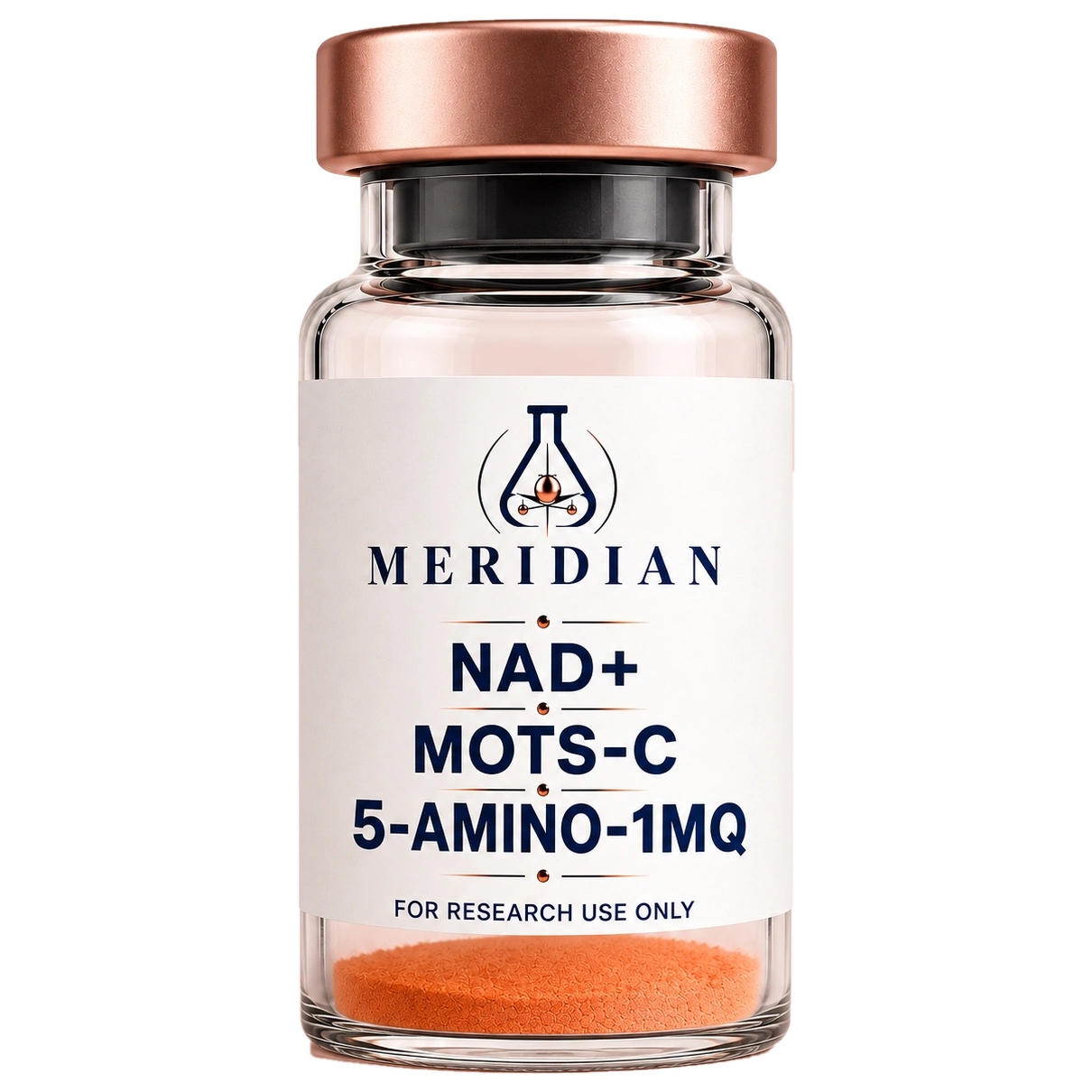
MitoPrime
A three-part research formula exploring cellular energy, mitochondrial signaling, NAD+ biology, and metabolic pathways.
Start here
What exactly is MitoPrime?
MitoPrime brings together three different research components connected through cellular-energy and metabolic biology.
NAD+ is a biological molecule involved in cellular energy and many enzyme reactions. MOTS-C is a mitochondrial-derived peptide studied in metabolic and cellular-signaling research. 5-Amino-1MQ is a small-molecule compound studied for its interaction with NNMT, an enzyme involved in nicotinamide metabolism.
Meet the three
Three Components. Three Research Directions.
This is a simplified map of the formula and the main biology each component is connected to.
NAD+
Energy metabolism • NAD+-dependent enzymes • Cellular signaling • Aging biology
MOTS-C
Metabolic adaptation • AMPK-related signaling • Exercise biology • Cellular stress response
5-AMINO-1MQ
Nicotinamide metabolism • NNMT inhibition • Adipose biology • Metabolic signaling
These are simplified research areas designed to make the biology easier to understand.
Why researchers are interested
What are scientists exploring?
These cards explain why each area connects to one or more parts of the MitoPrime research formula.
Cellular Energy
NAD+ is part of many reactions cells use to manage energy, while MOTS-C is studied in mitochondrial signaling.
Mitochondrial Biology
Mitochondria help cells turn fuel into usable energy, and MOTS-C is a peptide encoded by mitochondrial DNA.
NAD+ Metabolism
NAD+ research looks at how this molecule is made, used, and recycled by enzymes inside cells.
Metabolic Regulation
MOTS-C and NNMT research both connect to how cells respond to nutrient, energy, and metabolic signals.
Exercise & Metabolic Adaptation
MOTS-C appears in research about how cells adapt to metabolic stress and movement-related biology.
Cellular Stress Response
Cellular stress response research studies how cells adjust when energy demand, oxidative pressure, or environment changes.
Aging Biology
NAD+ and mitochondrial research are often discussed in aging biology because energy systems change as cells age.
NNMT & Nicotinamide Research
5-Amino-1MQ is studied because it interacts with NNMT, an enzyme involved in nicotinamide metabolism.
Read the research
Go deeper.
These source cards link to published research connected to NAD+ biology, mitochondrial signaling, MOTS-C, NNMT, and 5-Amino-1MQ.
NAD+ metabolism: A therapeutic target for age-related metabolic disease
2013 • Reviews NAD+ metabolism, energy biology, sirtuins, PARPs, and age-related metabolic research.
Read the study →ReviewCrosstalk between poly(ADP-ribose) polymerase and sirtuin enzymes
2013 • Explains how NAD+-dependent enzyme families connect with metabolism, oxidative stress, and mitochondria.
Read the study →Animal + laboratoryThe mitochondrial-derived peptide MOTS-c promotes metabolic homeostasis and reduces obesity and insulin resistance
2015 • Introduced MOTS-C in preclinical research involving metabolic homeostasis, skeletal muscle, and AMPK signaling.
Read the study →LaboratoryThe Mitochondrial-Encoded Peptide MOTS-c Translocates to the Nucleus to Regulate Nuclear Gene Expression in Response to Metabolic Stress
2018 • Studied MOTS-C movement to the nucleus and gene-expression responses during metabolic stress.
Read the study →Animal + laboratorySelective and membrane-permeable small molecule inhibitors of nicotinamide N-methyltransferase reverse high fat diet-induced obesity in mice
2017 • Studied small-molecule NNMT inhibitors, including 5-Amino-1MQ-related research, in adipose and metabolic models.
Read the study →Animal + laboratoryNicotinamide N-methyltransferase knockdown protects against diet-induced obesity
2014 • Investigated NNMT knockdown and nicotinamide metabolism in diet-induced obesity models.
Read the study →Animal + laboratoryCombined nicotinamide N-methyltransferase inhibition and reduced-calorie diet normalizes body composition and enhances metabolic benefits in obese mice
2021 • Examined NNMT inhibition with dietary change in mouse models of body composition and metabolic markers.
Read the study →Interested in the formula?
Explore MitoPrime with the same Meridian quality standard.
Third-party tested. Endotoxins and heavy metals screened. COA available upon request.
For research use only. The information in Discover is provided for educational purposes and summarizes areas of published and emerging research. It does not establish that MitoPrime or its individual components are safe or effective for treating, preventing, or diagnosing any disease.